Auto Repair · Tool Review
7 Reasons That Cracked Bumper Doesn't Need a $1,200 Replacement — Just an $89 Repair You Can Do Yourself
Backed by a 60-day money-back guarantee.
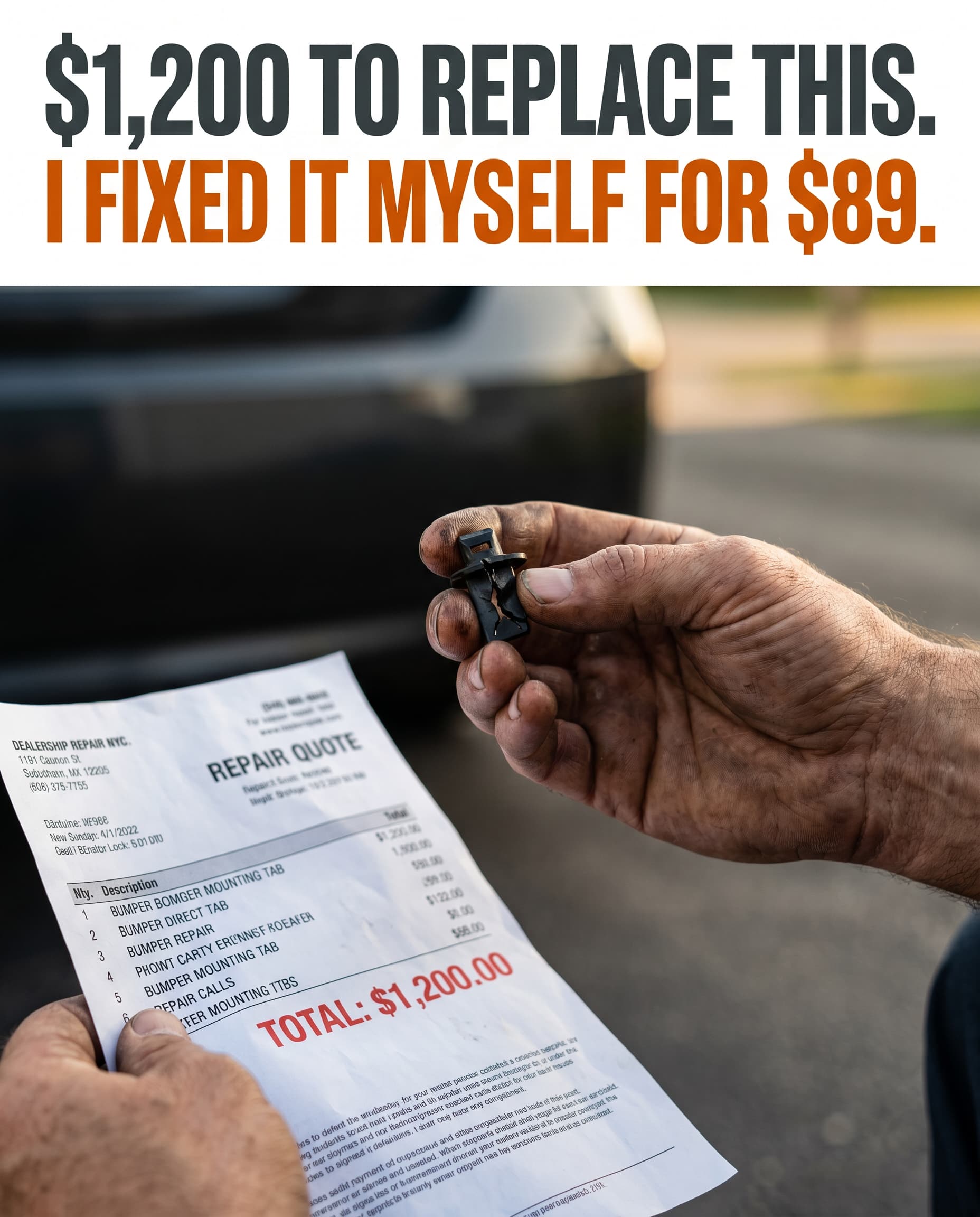
The $89 Repair They Turn Into a $1,200 Replacement
The damage on a cracked bumper, fender, or housing is almost never the expensive part. The racket lives in one word: "assembly."
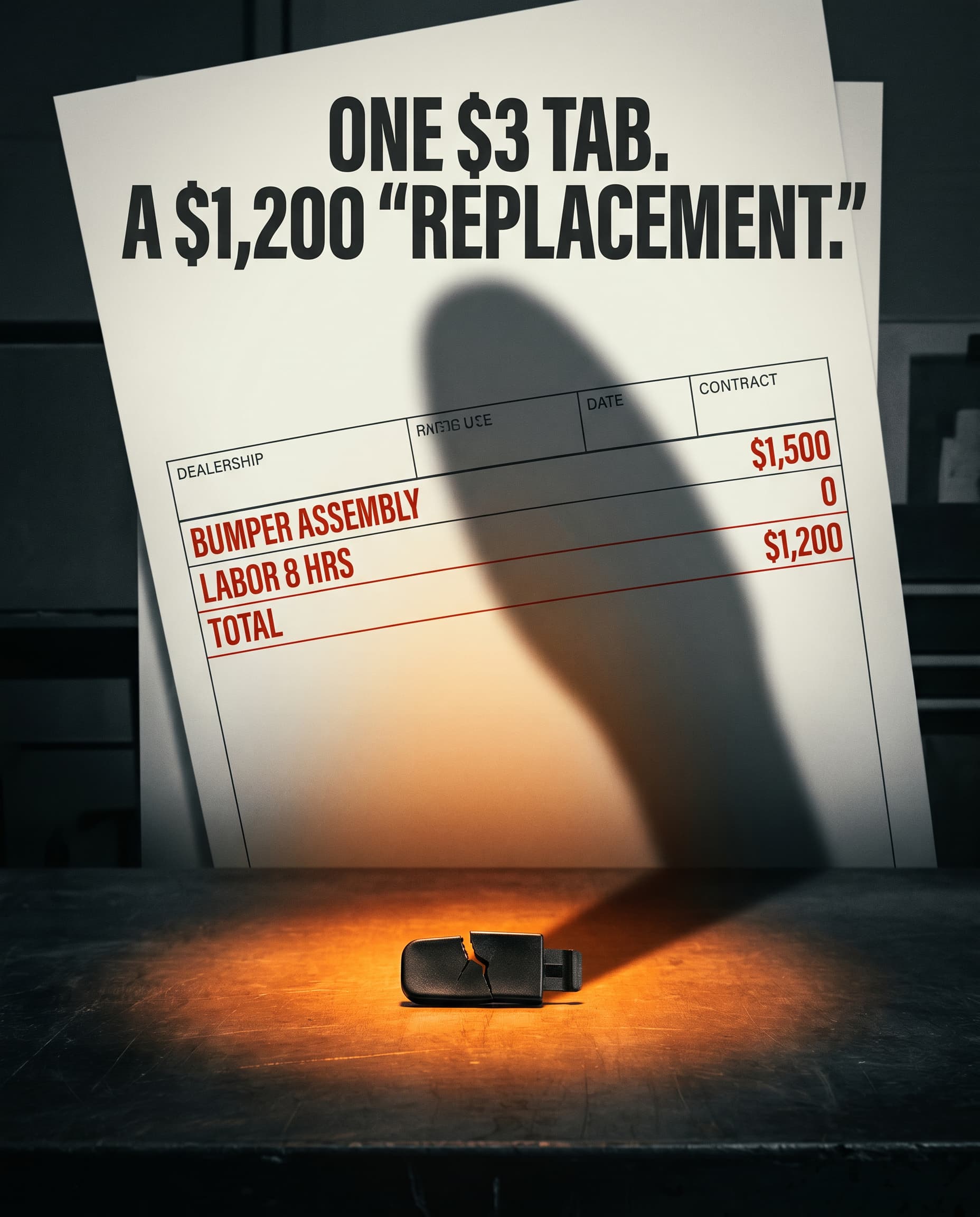
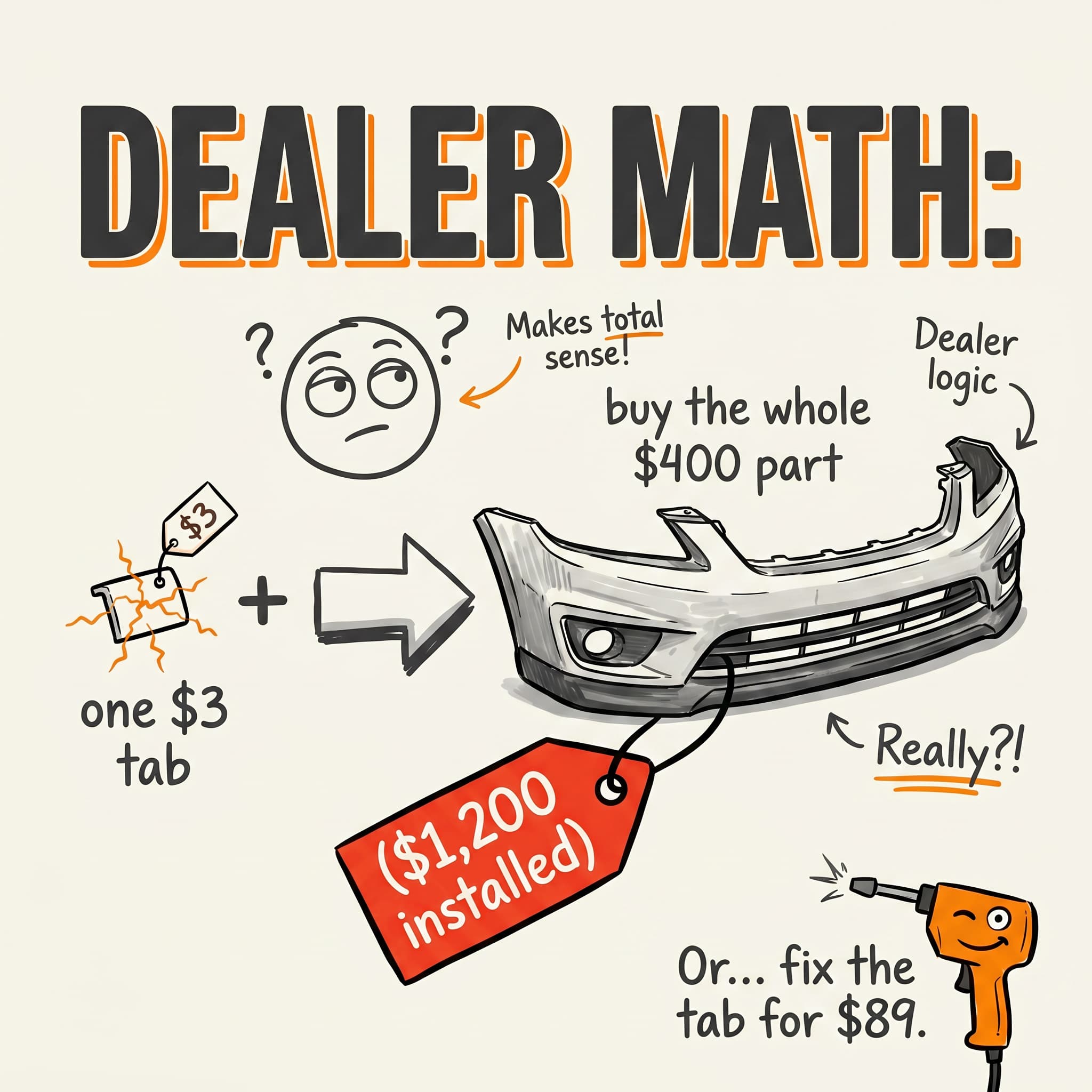
A snapped mounting tab — a piece of plastic smaller than your thumb — gets quoted as a full bumper replacement, because shops don't fix tabs. They swap whole parts and bill the labor. The numbers real people get handed for what is purely cosmetic plastic damage are hard to believe until it's your car:
- $550 to replace a cracked bumper cover — when the part itself was about $200 online.
- $1,200 to replace a rear bumper over a crack you could cover with two fingers.
- $2,600 for a bumper and hood, when the actual aftermarket parts cost a fraction of that.
One shop billed eight hours of labor to replace a single bumper. And if your part is more than a few years old, odds are it's been discontinued — no replacement at any price, leaving you with a perfect vehicle and a problem the dealer calls unfixable.
You're not paying for the damage. You're paying for a system that would rather sell you the whole thing than fix the small thing.
It's Not You — Here's Why Glue and Epoxy Always Let Go
If you've ever fixed a crack with super glue, JB Weld, or epoxy and watched it pop loose a few weeks later, that wasn't you doing it wrong. It was physics working against you.
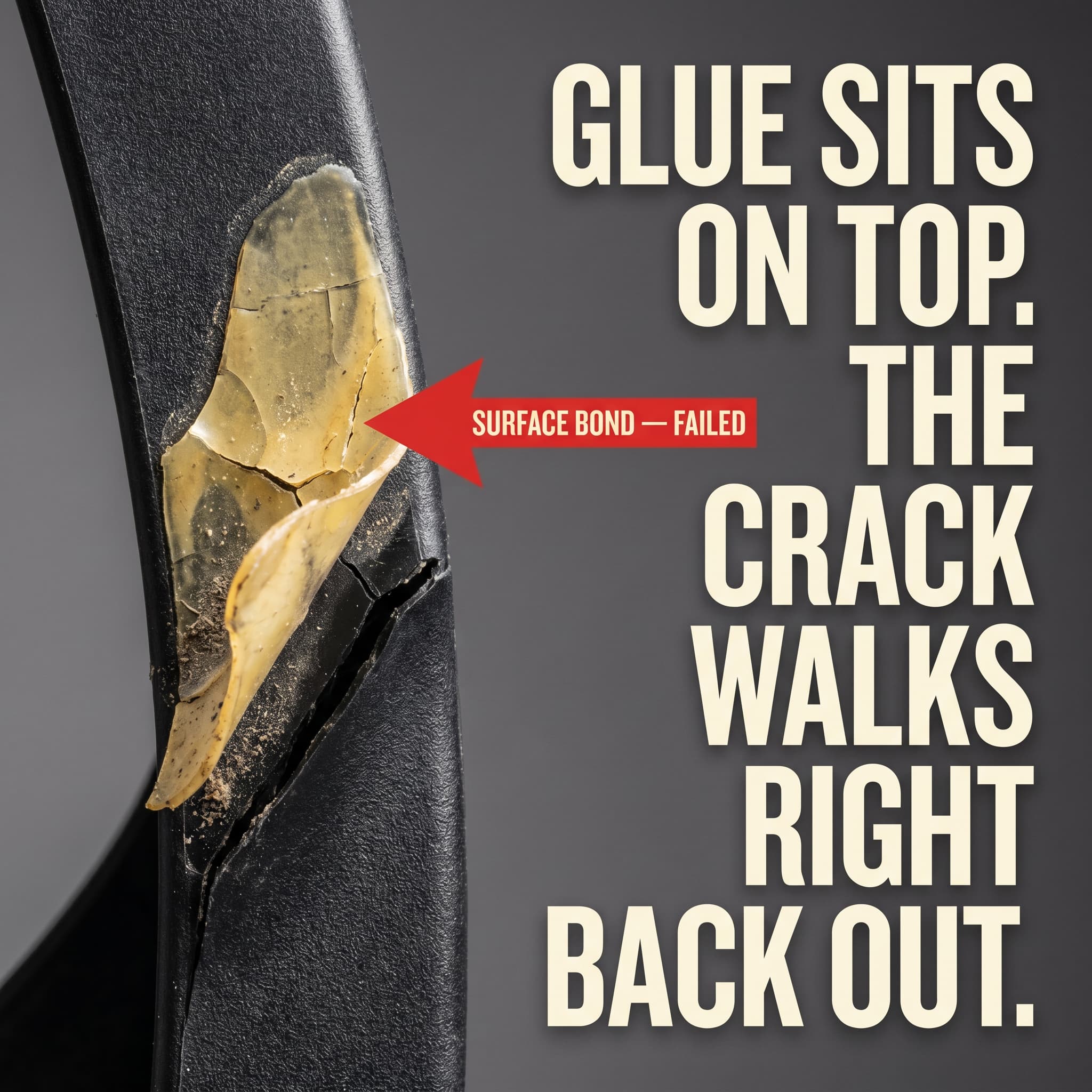
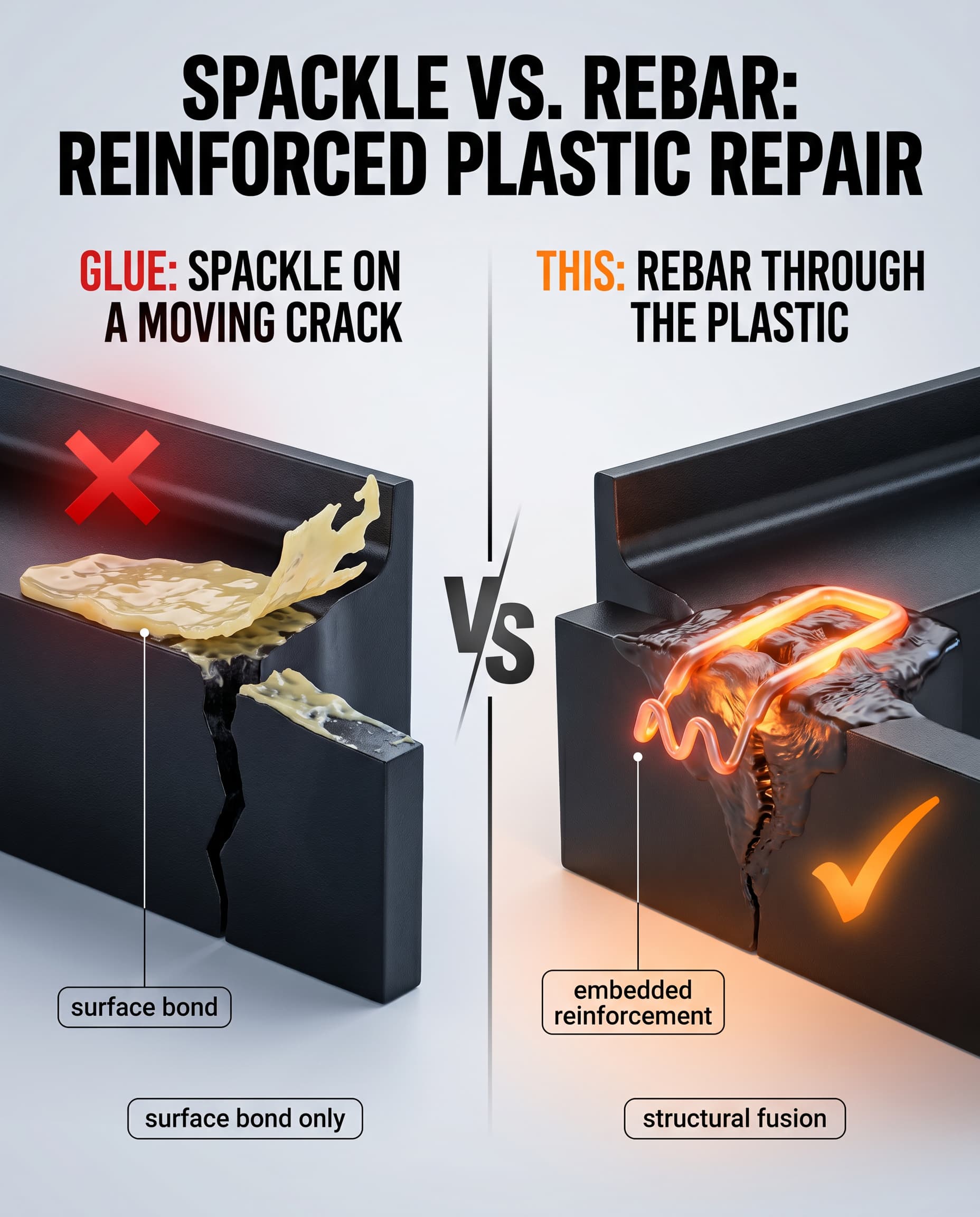
Glue and epoxy bond the surface. They sit on top of the plastic, like spackle smeared over a crack in a wall. But a bumper or fender never sits still. It flexes over every bump, vibrates down every road, and swings through hot and cold all day long. A bond that only grips the skin of the plastic can't survive that. It peels from the edges, and the crack walks right back out from under it.
There's a second trap. Once runny adhesive seeps down into the gap, the two sides won't reseat flush again — so your next repair starts even further behind than the first.
The problem was never that you needed a stronger glue. It's that nothing was holding the break together from the inside.
The Repair That Works From the Inside Out
Here's the trick body shops use that nobody at the front counter ever mentions.
Instead of gluing the surface, you heat a thin metal staple and press it across the crack. The staple sinks down into the plastic, and as the plastic cools it fuses around the metal and locks it in place. The reinforcement isn't sitting on top of the break anymore — it's embedded inside it, bridging the two halves like rebar runs through concrete.
That's the whole difference between a patch and a weld. A patch hides a crack. A weld makes the two sides one piece of plastic again, with a steel spine across the seam carrying the stress that used to land on one fragile line.
Glue asks the surface to hold. This asks the full thickness of the plastic to hold. That's why it survives the flexing and the cold that peels everything else off.
Strong Enough That the Next Crack Lands Somewhere Else
This is the part that surprises people the first time it happens to them.
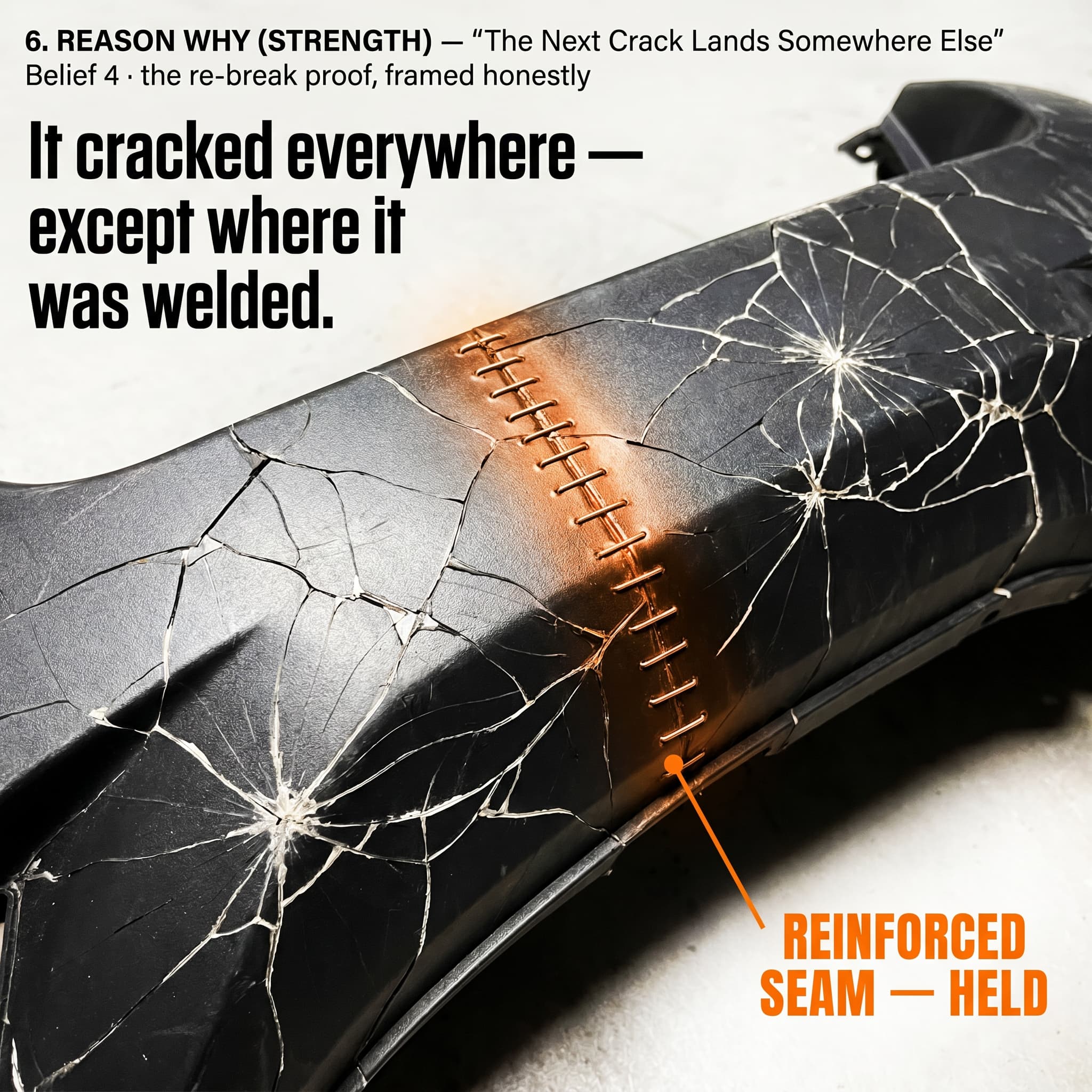
DIYers who reinforce a bumper or panel this way keep reporting the same surprising result: when the part takes a second hit down the road, it tends to crack everywhere — except where it was repaired. In their experience, the seam that was welded and reinforced from the inside often holds when the bare plastic around it doesn't.
It makes sense once you picture it. The original plastic was a single, unsupported wall. The repaired seam has a metal staple fused through it, spreading the load across the break instead of leaving it on one fragile line.
A glue repair, at its best, gets you back to square one for a little while. A proper weld does something different: it reinforces the exact spot that failed — so the crack you just fixed is no longer the weak point it used to be.
"The dealer wanted $1,100 to replace the whole bumper over one broken tab. I fixed it myself in about twenty minutes, and it's held through a full winter of rough roads. Wish I'd known about this years ago."
— James W., Verified Buyer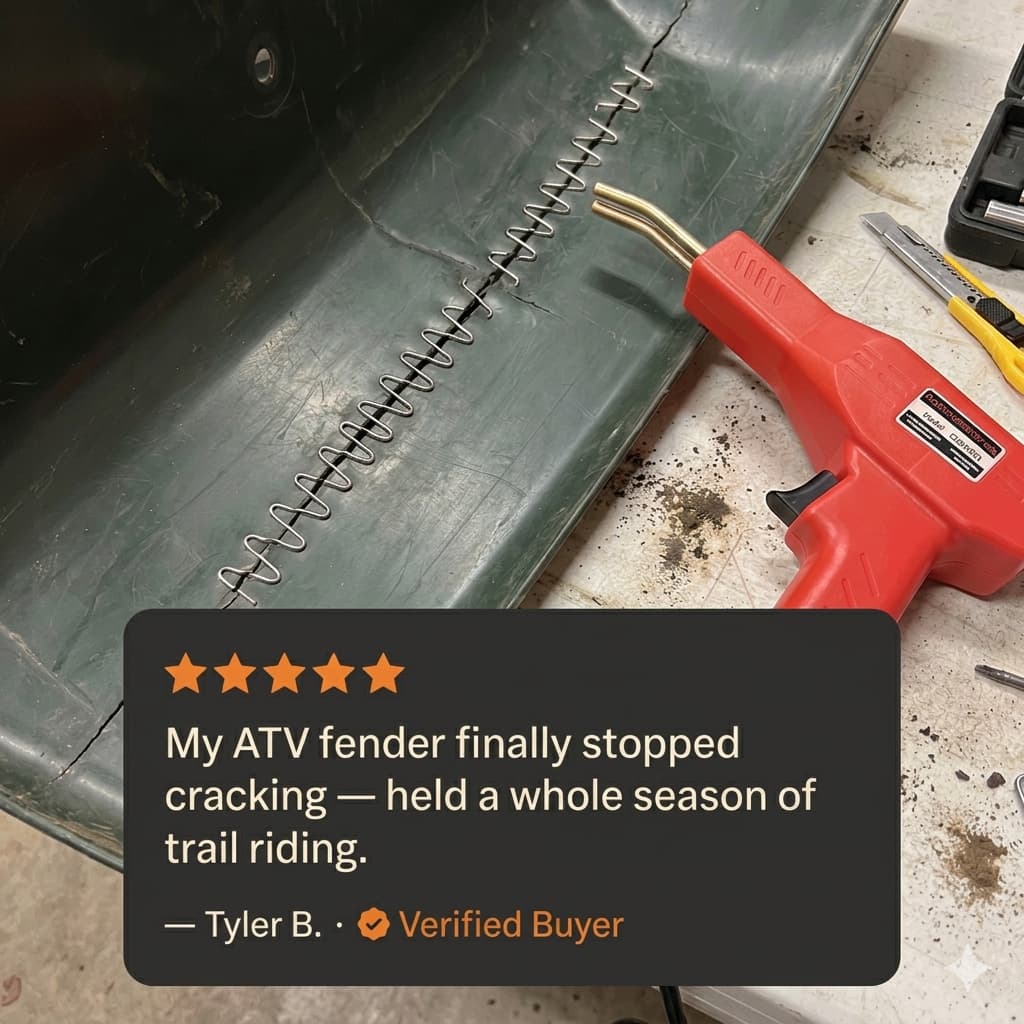
You Don't Need a Single Special Skill to Do This
The real reason most people never try to fix it themselves isn't laziness. It's a quiet fear of making it worse — burning a hole clean through the panel, or finding out too late that their plastic won't cooperate. Both are far easier to avoid than you'd think.
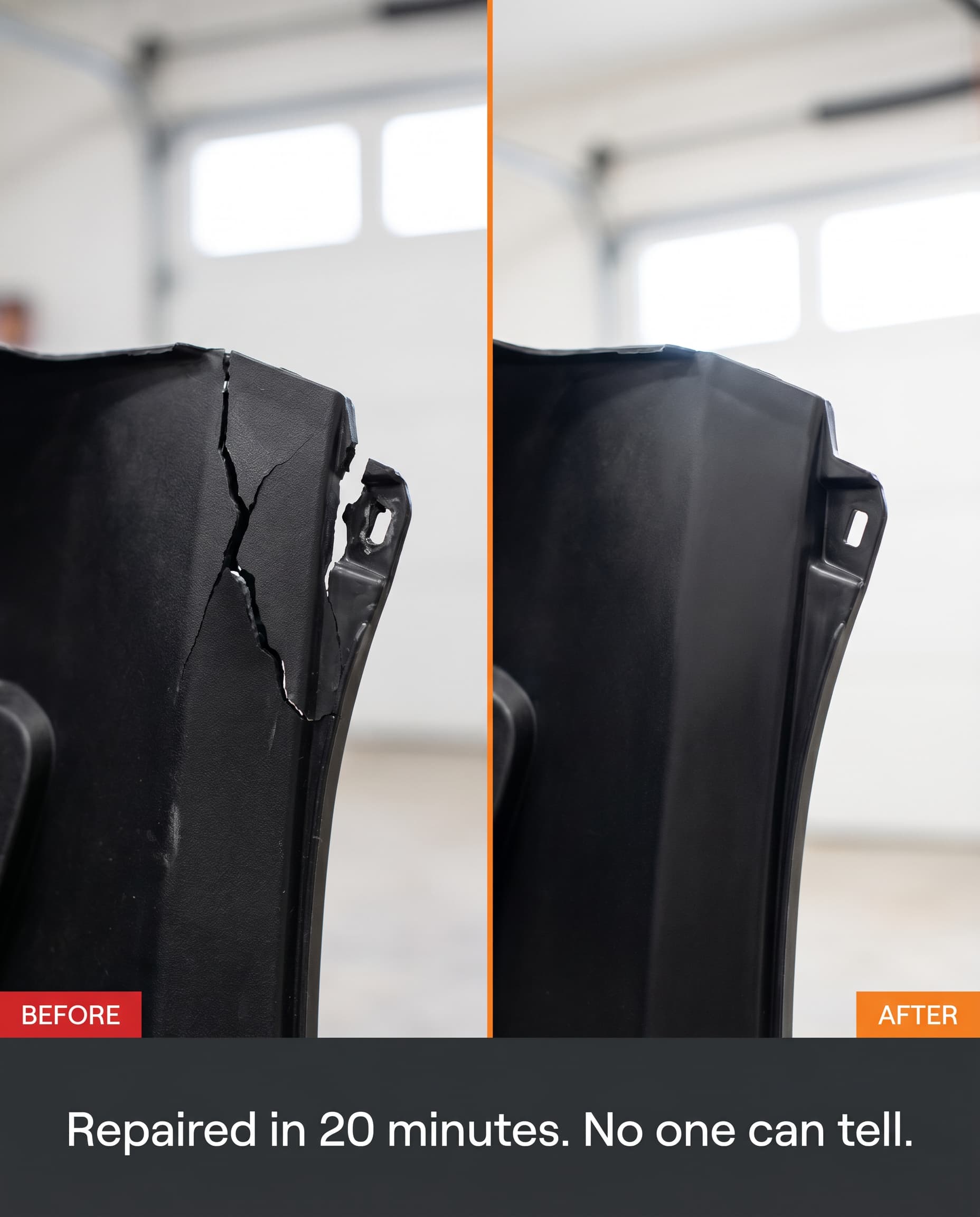
If you can run a hot glue gun, you can run this. You plug it into any standard outlet, let the tip heat up — it's ready in 3 to 10 seconds — then lay a staple across the crack and press it in. A cracked tab is about a 15-to-20-minute job from start to finish.
- Adjustable heat lets you match the tool to the plastic instead of guessing — that's what keeps you from scorching a thin panel. (The thirty-second move every pro uses: test on a hidden spot first.)
- It works on the plastics your gear is actually made of — ABS, PP, PE, and nylon — covering the vast majority of bumpers, fenders, housings, trim, storage bins, and tool bodies.
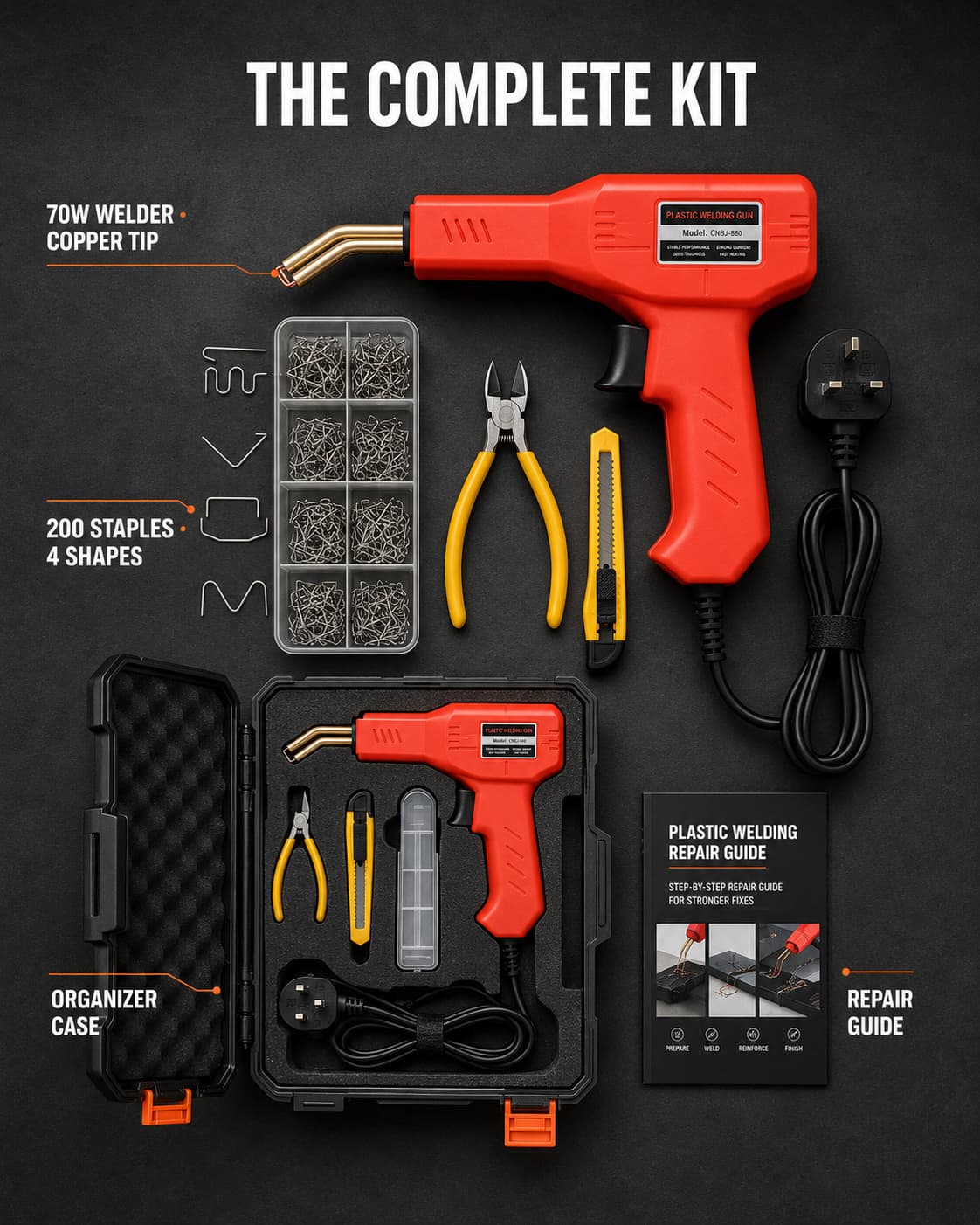
- It comes with four staple shapes — 200 staples in all, for straight cracks, broken corners and joints, and reinforcing weak spots, so you match the right reinforcement to the break.
- Only the tip gets hot, and it cools in seconds once you set it down — you're guiding it like a pen, not wrestling a blowtorch.
And when the staples are in, the repair cleans up. Trim the tops flush, run a little sandpaper over the seam, and — on a painted panel — a touch of matching paint makes it vanish. This isn't a zip-tie that announces itself every time someone looks at your car. Done right, no one can tell the part was ever broken.
This isn't a craft you have to learn. It's a tool you point at the problem.
It Pays For Itself on the Very First Repair
This is the math that makes the whole thing obvious the moment you see it laid out. Run the numbers on a single cracked bumper:
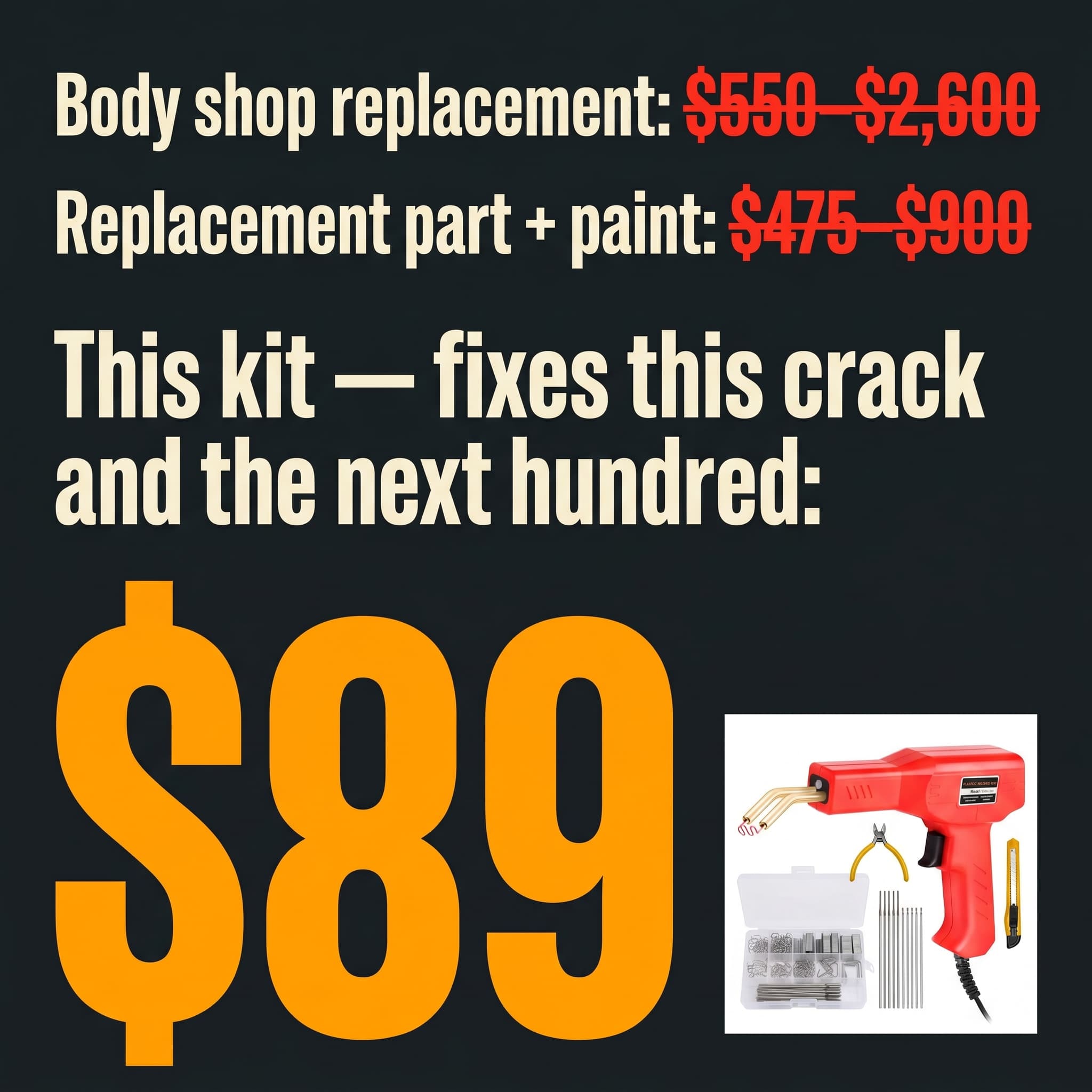
The first repair doesn't just save you money — it pays for the entire kit several times over, and you still own the tool afterward.
The cracked tab today. The fender next spring. The kid's snapped storage tote, the lawnmower shroud, the cracked tool case that's been sitting in the corner of the garage. One $89 purchase against a lifetime of $300–$2,600 quotes you will simply never pay again.
The Complete Kit That Won't Leave You Stranded Halfway Through
You've probably seen bargain "hot stapler" kits floating around for twenty-odd dollars, and it's fair to wonder what the difference really is. Here it is, plainly.
The cheap ones are a gamble, and the people who buy them say the same things over and over: the body feels flimsy, the staples arrive loose in a bag you'll lose by next weekend, there's no real guidance, and you run out of the one shape you needed right in the middle of the job. When a repair goes sideways at minute one because you've got the wrong staple and no instructions, the twenty dollars you "saved" stops feeling like a deal.
This kit is built to be the one you reach for and finish the job with. Here's the difference, line by line:
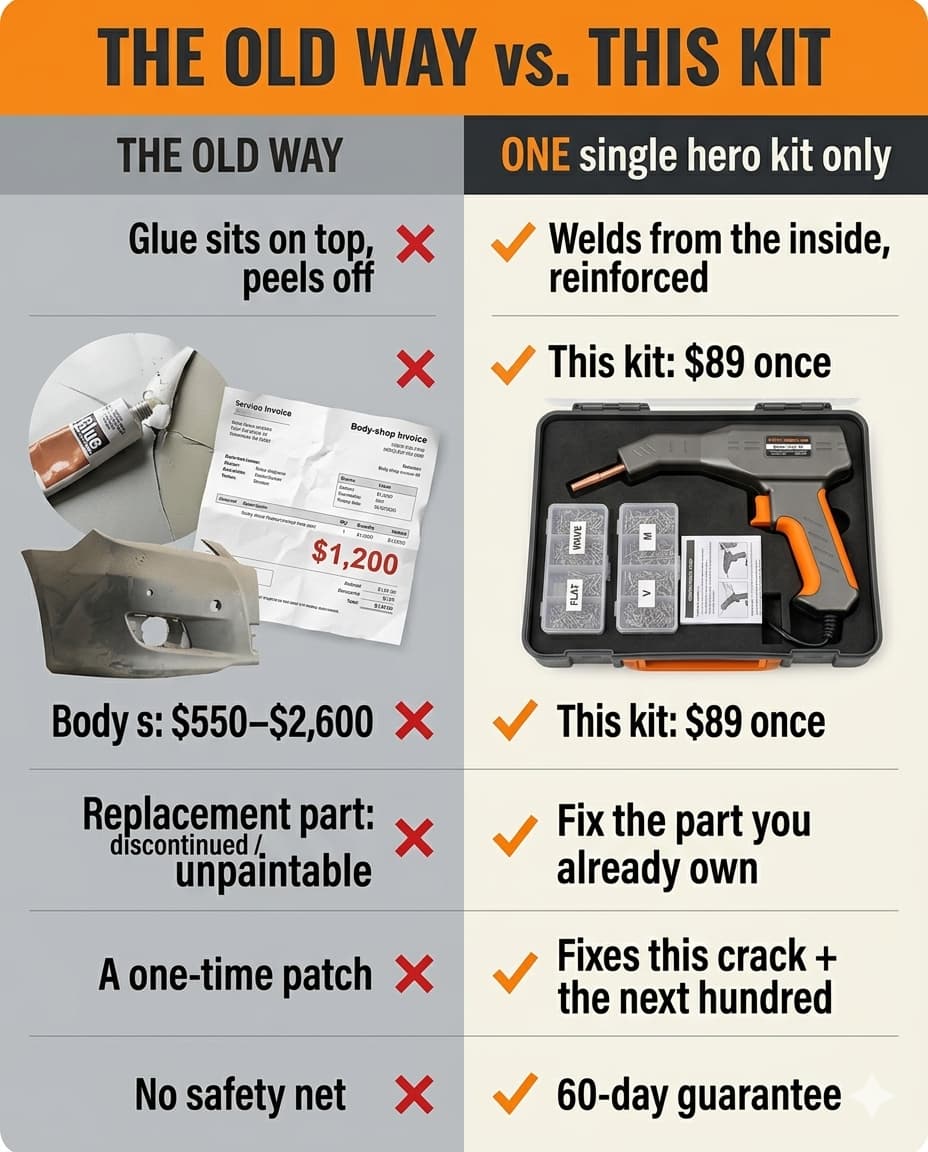
That last line is the one that matters most. It means trying this costs you nothing but an afternoon. Either you fix the crack — and the next dozen after it — for $89, or you don't pay at all.
Hear From Real DIYers
Verified buyers who refuse to pay the replace-the-whole-thing tax.
Fixed the tab the dealer wanted $900 to "replace."
"Reversed into a post and snapped the mounting tab on my bumper. Dealer quoted me nine hundred bucks for a whole new assembly. Welded it back myself in about twenty minutes — dead solid, and you genuinely can't see it from the outside. Should've owned this years ago."
My ATV fender finally stopped cracking.
"I'd zip-tied and glued this fender three times and it always let go. Stapled it from the back with this and it hasn't budged through a whole season of trail riding. The glue never had a chance."
It's not just for cars.
"Bought it for a cracked bumper, but I've since fixed a kayak, the lid on a big storage tote, and the housing on my shop vac. Pays for itself over and over. Wish I'd known this tool existed."
Ready to Stop Paying the Replace-the-Whole-Thing Tax?
One small crack should never cost you a four-figure replacement, a discontinued-part dead end, or another glue repair you already know is going to fail. For the price of a single shop visit, you get the tool that fixes the crack in front of you — and every one after it — from the inside out, the way the pros quietly do it.
And a crack doesn't wait. Every flex of the panel and every cold morning works it a little wider — the tab that's chipped today is the one that snaps clean off next month, right about when an $89 repair turns into the full replacement you were trying to avoid. Fixing it while it's small is the entire point.
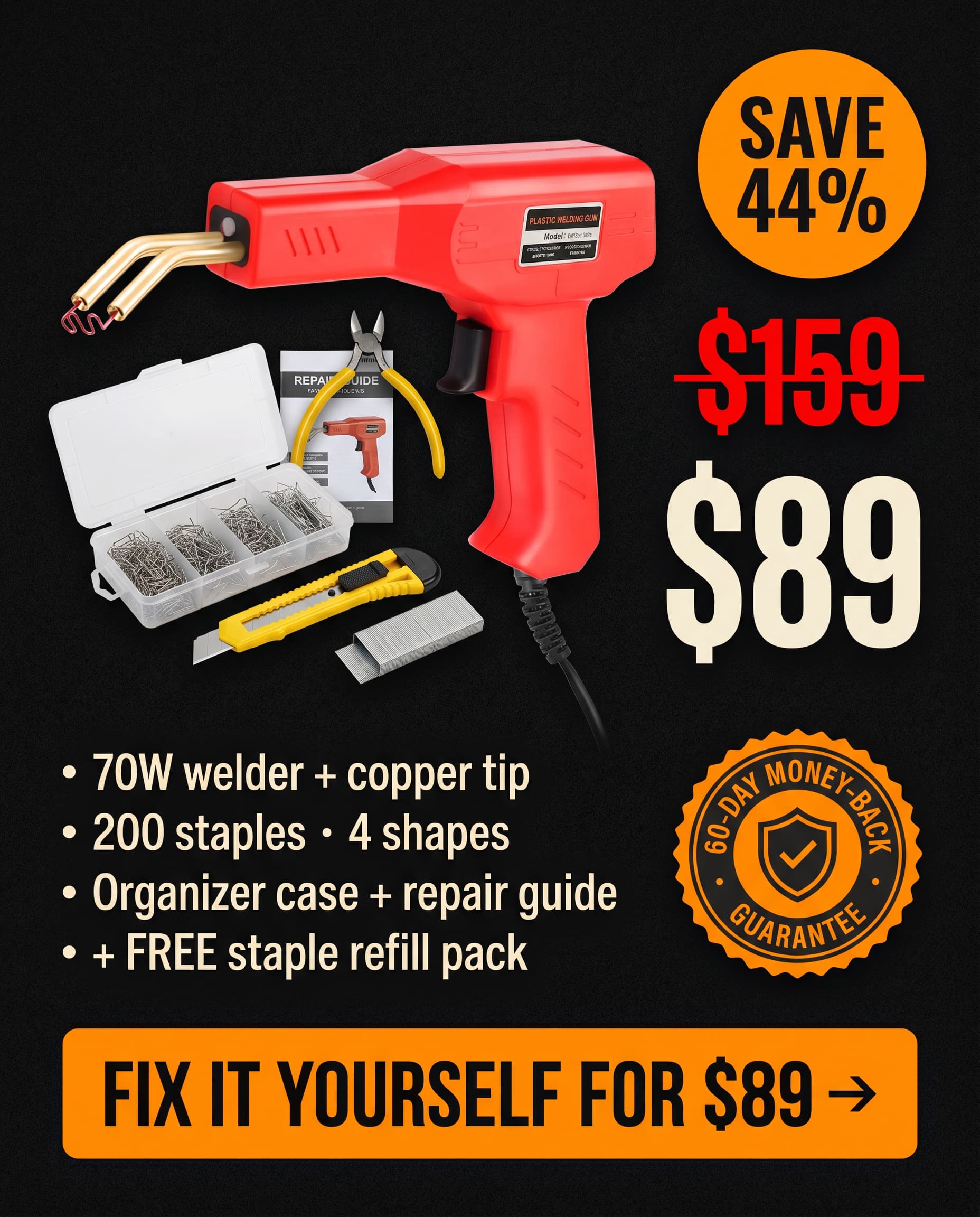
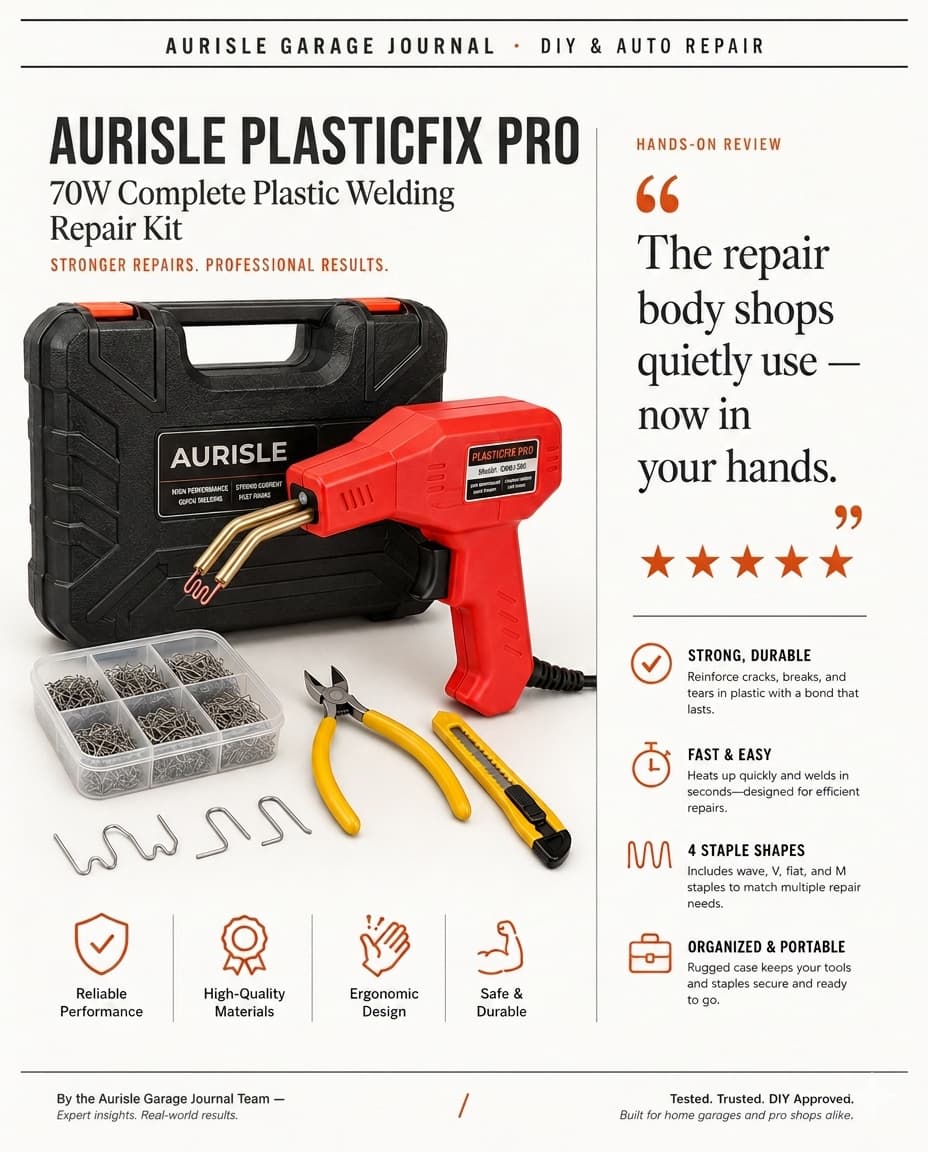
🔧 Aurisle PlasticFix Pro — 70W Complete Plastic Welding Repair Kit
- Reinforces cracks from the inside — not glue that only sits on the surface
- Fixes bumpers, tabs, fenders, housings, trim, and household plastics
- 70W welder with a solid copper tip + 200 staples (50 each of 4 shapes) + organizer case + repair guide
- Heats in 3–10 seconds · plugs into any standard US outlet
- Works on ABS, PP, PE, and nylon
- 60-Day money-back guarantee — weld it or your money back
Backed by a 60-day money-back guarantee.
60-Day Money-Back Guarantee. Make your repair. If it doesn't hold, contact us for a full refund. No forms. No hassle. No risk.